
The Prostate Biopsy: What to Expect Before, During, and After
Dr. Harry Black explains what a prostate biopsy is, how it's done, what recovery feels like, and why it remains the definitive test for prostate cancer.
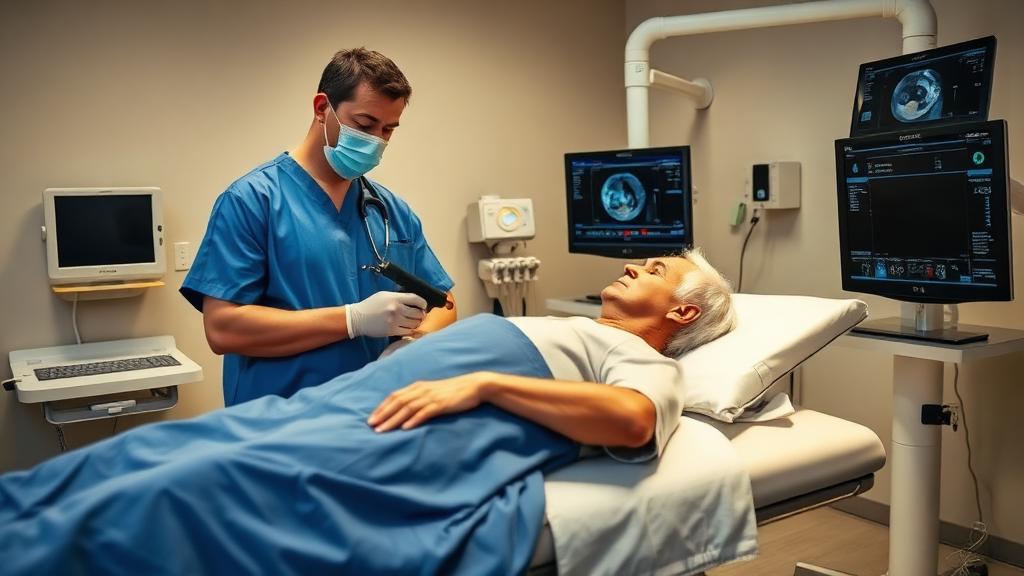
The word "biopsy" frightens people, and I understand why. It is the test that turns suspicion into an answer. But after 35 years as a surgeon and one biopsy of my own, I can tell you that the procedure itself is far less dramatic than the dread leading up to it. Mine took about 15 minutes and felt like a short nap. Let me walk you through it the way I would in my office, so the fear shrinks down to its actual size.
This is education from a physician who has performed and received this test, not a substitute for your own urologist's guidance.
Why a Biopsy Is Necessary
You may have already had an elevated PSA and an MRI scan suspicious for cancer. Both are important, but neither is definitive. The only way to truly diagnose cancer, any cancer, is a tissue diagnosis: removing a small piece of tissue and examining it under a microscope.
Imaging raises suspicion. Only a biopsy gives the certainty and the detail needed to build a treatment plan.
A biopsy does more than confirm cancer is present. It produces the Gleason score, the grading that tells you how aggressive the tumor is. You cannot plan treatment without it.
How the Procedure Is Done
Once you and your urologist decide to proceed, the biopsy is scheduled. It is sometimes done in an office under local anesthesia, and sometimes in an operating room with mild sedation. The procedure itself usually takes less than 10 to 15 minutes.
Using ultrasound, sometimes blended with your MRI images for guidance, the urologist identifies suspicious areas and takes a series of small core samples. There are two main approaches:
- Transrectal biopsy - instruments pass through the lower rectum to reach the prostate; this is currently the preferred method in the US
- Transperineal biopsy - a needle passes through the perineum, the skin between the scrotum and the anus
Usually at least 12 core samples are taken, sometimes 16 to 18, depending on what the urologist judges necessary. Most men go home the same day.
What My Biopsy Was Like
My urologist preferred me asleep, so mine was done in a surgery center under the same kind of light "twilight" sedation used for a colonoscopy. If you have had one of those, you know it is essentially a pleasant nap, in my case about 15 minutes, without the unpleasant prep. I have spoken with many men who had theirs under straight local anesthesia with minimal discomfort. Either approach is reasonable.
What Recovery Feels Like
Most men tolerate the biopsy well, but it is honest to tell you what is normal afterward, so nothing alarms you:
- Occasional rectal pain or sharp twinges - usually gone by the next day
- Blood in the urine - commonly for a couple of days, sometimes with small clots that pass easily
- Blood in the semen - this one can last a couple of weeks or more, and it can look dramatic without being dangerous
- Mild discomfort with urination or ejaculation - typically short-lived
- Easy fatigue - a tired, drained feeling for a few days up to a week or so
In my case, I had occasional sharp rectal pains that were gone by the next day, blood in my urine for about three days, and mild fatigue. My biopsy was on a Friday, and I was back seeing patients on Monday.
The Risks Worth Knowing
Serious complications are uncommon, but the one to know about is infection, either of the urine or the prostate itself. Because of that risk, many urologists give a dose of antibiotics beforehand as protection. If an infection does occur, it is treated promptly, occasionally requiring IV antibiotics, though that is rare.
The other thing to expect is simply that some men feel more discomfort or fatigue than average for a few days. A good surgeon will tell you this up front rather than let it surprise you.
The Reassurance I Want You to Hold
The biopsy is the moment that often feels like the point of no return. But it is a brief, well-tolerated procedure that gives you the single most important piece of information in your entire journey: exactly what you are dealing with. You cannot make good decisions in the dark. The biopsy turns the lights on.
Walk in knowing that the anxiety beforehand is almost always larger than the experience itself.
References
- Bjurlin MA, et al. Optimization of prostate biopsy: review of technique and complications. Urol Clin North Am. 2014;41(2):299-313.
- Loeb S, et al. Systematic review of complications of prostate biopsy. Eur Urol. 2013;64(6):876-892.
- Kasivisvanathan V, et al. MRI-Targeted or Standard Biopsy for Prostate-Cancer Diagnosis (PRECISION). N Engl J Med. 2018;378(19):1767-1777.
- Pradere B, et al. Transperineal versus transrectal prostate biopsy infection rates. J Urol. 2021;205(3):653-663.
- American Cancer Society. Tests to Diagnose and Stage Prostate Cancer. 2024.
Sunrise Institute is based in Florida and serves clients nationally through physician-led education sessions.
Take the Next Step
Book a Personalized Insight Consultation with Dr. Black - in Daytona Beach or via Zoom.