
Radiation Therapy for Prostate Cancer Explained
Dr. Harry Black explains the types of radiation therapy for prostate cancer - external beam, brachytherapy, SBRT, and Pluvicto - and their side effects.
When I was choosing how to treat my own prostate cancer, every radiation oncologist I spoke with told me that radiation plus hormone therapy would likely give me the same long-term survival as surgery. I chose surgery for my own reasons, but I want to be clear: radiation is a powerful, sophisticated frontline treatment, and for many men it is the right one. As a surgeon, I have no turf to defend here. I only want you to understand the option well enough to weigh it honestly.
This is education, not a recommendation. Your radiation oncologist will tailor any plan to your specific tumor.
How Modern Radiation Is Different
The radiation given today barely resembles what was delivered 20 years ago. That matters when you read older studies or hear older horror stories. Modern radiation uses imaging to target the tumor precisely and to spare the healthy tissue around it.
Much of the fear around radiation comes from outdated experiences. Today's techniques are far more targeted and far gentler on surrounding tissue.
There are two broad categories: external beam radiation and brachytherapy, the radioactive seeds placed inside the prostate.
External Beam Radiation
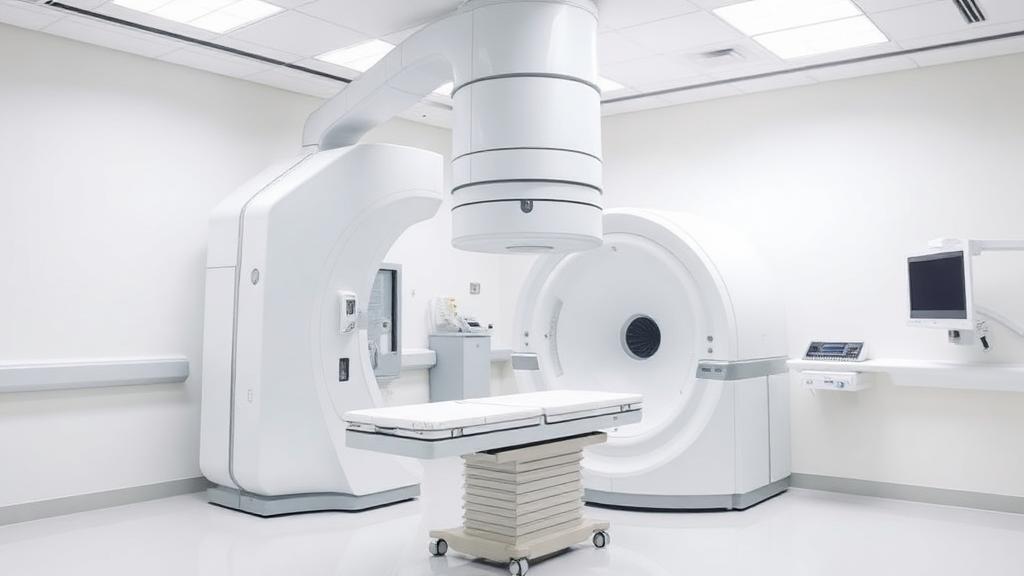
External beam radiation is delivered from a machine outside the body, usually over five to six weeks, sometimes a little longer. Before treatment begins, you will have a planning session called simulation, where the exact radiation fields are mapped to hit the tumor and protect the bladder and rectum.
The treatments are given in small daily doses, called fractions, that add up to the full prescribed amount. Several modern forms exist:
- IG-IMRT (image-guided, intensity-modulated radiation) - the machine rotates around you, delivering precisely calculated doses, often used for full pelvic treatment that includes the lymph nodes
- SBRT (stereotactic body radiation therapy) - higher doses over far fewer sessions, highly targeted with imaging
External beam can also be aimed at isolated spots where cancer has spread, such as areas in the bones.
Brachytherapy: Radioactive Seeds
Brachytherapy places radioactive material directly into the prostate. It is done in an operating room and comes in two forms:
- Low-dose brachytherapy - small radioactive seeds are placed permanently into the prostate using ultrasound guidance. They gradually lose their radioactivity over time.
- High-dose brachytherapy - hollow tubes are placed into the prostate, higher-dose material is inserted for a short time, and no seeds are left behind afterward.
Sometimes brachytherapy is the only treatment needed. Sometimes it is combined with external beam radiation.
Pluvicto: The Newest Frontier
The newest form of radiation therapy uses a radioactive particle attached to a molecule that seeks out prostate cancer cells specifically, binding to the same PSMA marker used in advanced PET scans. Given through an IV, it delivers radiation directly to cancer cells while largely sparing healthy ones. For now, it is used in advanced, hormone-resistant, metastatic disease under strict protocols, but its role will likely expand.
The Side Effects to Understand
No method of radiation is free of side effects, though serious ones are relatively rare with modern therapy. Common and possible effects include:
- Urinary symptoms - discomfort, urgency, frequency, sometimes blood in the urine, usually easing within weeks
- Rectal symptoms - irritation, occasional bleeding, looser stool
- Fatigue - more common with external beam than brachytherapy, building over the weeks of treatment
- Erectile dysfunction - possible with any radiation, though less common than with surgery
- Skin changes - redness or sensitivity in the treated area
Rarer complications, mostly due to the bladder and rectum sitting so close to the prostate, include radiation cystitis (bladder inflammation), radiation proctitis (rectal inflammation), and, when lymph nodes are treated, lymphedema or leg swelling. These are uncommon in the modern era but real for a small number of men.
How to Approach the Decision
If radiation is on your table, talk with a radiation oncologist about which technique fits your tumor, how many sessions it requires, and what side effect profile to expect. Then compare it honestly against surgery and hormone therapy. For many men, especially with lower or intermediate-grade tumors, radiation alone is enough, and it avoids the operating room entirely. The goal is not to pick the "best" treatment in the abstract. It is to pick the right one for you.
References
- Zelefsky MJ, et al. Long-term outcomes of high-dose intensity-modulated radiation therapy for prostate cancer. Int J Radiat Oncol Biol Phys. 2012;84(1):125-129.
- Widmark A, et al. Ultra-hypofractionated versus conventionally fractionated radiotherapy for prostate cancer (HYPO-RT-PC). Lancet. 2019;394(10196):385-395.
- Hauswald H, et al. High-dose-rate monotherapy for localized prostate cancer. Int J Radiat Oncol Biol Phys. 2016;94(4):667-674.
- Sartor O, et al. Lutetium-177-PSMA-617 for Metastatic Castration-Resistant Prostate Cancer (VISION). N Engl J Med. 2021;385(12):1091-1103.
- American Cancer Society. Radiation Therapy for Prostate Cancer. 2024.
Sunrise Institute is based in Florida and serves clients nationally through physician-led education sessions.
Take the Next Step
Book a Personalized Insight Consultation with Dr. Black - in Daytona Beach or via Zoom.